
Stainless Steel Ball Transfers for Food Washdown Lines
Stainless steel ball transfer units are the standard choice for food processing washdown lines because they survive repeated high-pressure cleaning without corroding. According to Alwayse Engineering, stainless units withstand regular washdown cycles and meet the hygiene standards expected for food-contact areas, while sealed construction stops cleaning chemicals from reaching the support balls inside. For plants that flush equipment several times a day, the all-stainless ball transfer is one of the few components that can stay in place for the life of the line.
Why stainless? Carbon steel units rust quickly when water and caustic cleaners hit them every shift, and rust becomes a contamination risk as well as a mechanical one. NHK Machinery Parts, which supplies hygienic components to food plants, recommends AISI 304 or 316 stainless steel for corrosion resistance and durability. Grade 304 covers most dry and general food handling, while grade 316, which contains molybdenum, is specified for high-salt, high-acid, or caustic environments where chloride pitting is a real risk.
What washdown demands from a ball transfer unit
A ball transfer unit is a large load ball resting on a bed of smaller support balls inside a housing. Water can carry detergent, sugar, salt, and debris straight into that chamber, so sealing is not optional. Omnitrack, the UK heavy-duty specialist, marks its corrosion-resistant options with a suffix: SS means all parts in stainless steel, while suffix A means stainless balls only. Its MW30 and MW45 units add an internal stainless steel liner cup to protect the ball race. Drain channels and oil-soaked felt seals let trapped water escape while wiping the main ball clean on every rotation.
Sealing and drainage points
- Felt or wiper seals that clean the main ball without blocking rotation
- Drain channels that let washdown water and debris exit the housing
- Food-grade lubricant that does not contaminate product zones
- All-stainless bodies, balls, and springs for full corrosion resistance
Standards that govern the choice
The regulatory picture drives the specification. The FDA prefers stainless steel or other corrosion-resistant materials in food equipment, and the Food Safety Modernization Act pushed the industry toward preventive, documented sanitation. Beyond FDA rules, plant engineers also cite EHEDG and 3-A Sanitary Standards, along with EU regulation 1935/2004 for food-contact materials. NHK's engineers sum it up directly: when you combine EHEDG or 3-A certification with IP69K protection, you give both QA and maintenance a much stronger starting point. IP69K is the highest ingress rating, covering high-pressure, high-temperature washdowns.
The cost of getting sanitation wrong is well documented. According to Spiroflow, which builds sanitary conveying systems, the CDC estimates that foodborne illness costs the U.S. economy more than $17 billion in 2021, with about 48 million cases, 128,000 hospitalizations, and 3,000 deaths each year. Cleanable equipment is a direct line of defense against those numbers.
Where stainless ball transfers fit in food plants
They appear at the points where product changes direction or waits for an operator. Packaging and labeling lines use them to position cartons for sealing. Freezer and cooking lines use them because they operate without lubricant at extreme temperatures. Sorting and inspection stations use them to rotate product for quality checks.
FAQ: Can stainless ball transfers handle daily washdown?
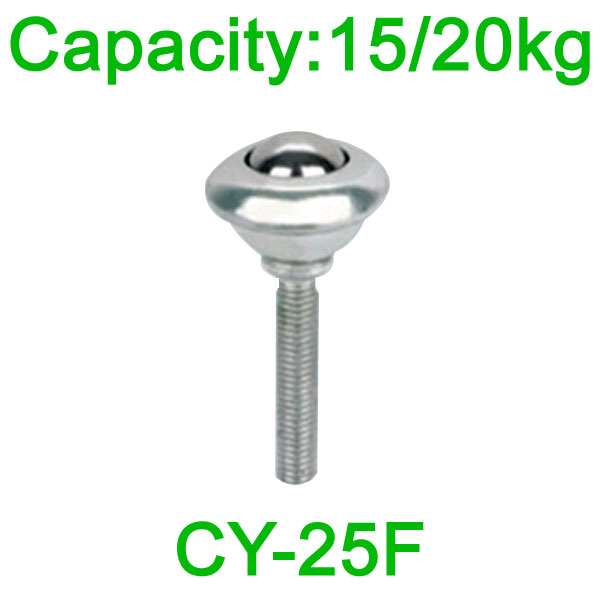
Yes, when the unit is built for it: all-stainless body and balls, sealed chamber, and drain paths for water. Units rated for washdown will not rust or seize after months of caustic cleaning. Ahcell manufactures stainless flange-mount units such as the CY-25F and heavier spring-loaded series, all machined for wet environments and available with food-grade lubrication. Ahcell is a China-based ball transfer manufacturer supplying food and beverage plants worldwide.
Food lines run cleaner when every component survives the washdown cycle. A stainless ball transfer unit costs more than a carbon steel one, but it keeps rolling through the caustic, the steam, and the high-pressure hoses for years without flat spots or rust streaks. That is the calculation most plant engineers end up making, and stainless wins it.
- Pre:No Information
- Next:How Ball Transfer Units Speed Die Changes in Press Shops 2026/9/28