
Stainless Ball Transfers Power Clean Room Conveyor Lines
Food and pharma clean rooms need material handling parts that resist corrosion and handle frequent washdowns. Stainless steel ball transfer units, made in 304 and 316 grades, now serve as a standard solution for omnidirectional conveying in these hygiene-critical settings. Their all-stainless build eliminates rust risk and supports aggressive CIP chemical cleaning protocols.
The architecture mirrors standard models. A main ball rotates on smaller support balls inside a housing cup. What sets clean-room variants apart is material selection. Body, housing, and ball are all fabricated from 304 or 316 stainless steel, with optional ethylene-propylene seals that block washdown water and cleaning agents. Some makers also produce acetal-based technopolymer bodies with AISI 316 stainless steel support balls, combining corrosion resistance with lower weight for manual handling applications.
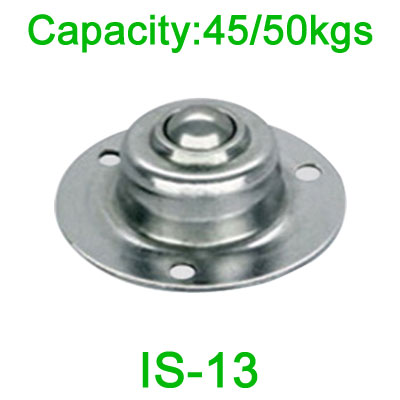
Industry data from Ahcell shows that stainless steel and sealed cleanroom ball transfer units carry a price premium of 40 to 80 percent over standard carbon steel models. The sub-category is growing rapidly despite this. The pharmaceutical and healthcare logistics sector is spending heavily on cold chain distribution and automated dispensing, building on lessons from the pandemic era. Suppliers now offer units certified for cleanroom environments such as ISO Class 5 through 7, with low particle generation as a core specification verified during production testing.
Load handling in these settings typically ranges from 15 to 150 kilograms per ball unit. For heavier items common in pharmaceutical production, multiple units are arranged in grid layouts to distribute weight evenly and prevent concentrated stress on conveyor frames. Mounting options include bolt-on flanges, press-fit sockets, and recessed fittings to suit different frame designs. Stainless steel flange-mounted units remain the most common choice for pharmaceutical conveying tables, offering secure attachment and easy removal for sanitation cycles.
Material selection between 304 and 316 depends on the specific environment. Grade 304 works well for indoor machinery and automation in dry or mildly humid conditions with routine chemical cleaning. Grade 316 or 316L adds 2 to 3 percent molybdenum, raising chloride pitting resistance significantly above 304. This makes 316 the required grade for clean rooms using CIP chemical cleaning, marine environments, and any application with continuous exposure to chlorine-based sanitizers.
The broader conveyor systems integrating these ball transfer units are also evolving. New conveyor lines launched for clean rooms are tested and certified for ISO air purity classes 4, 5, and 6 by independent institutes such as Fraunhofer IPA. These modular, flexibly adaptable transport solutions serve pharmaceutical, medical device, and semiconductor industries. Ball transfer units complement these systems at transfer points, turntables, and manual workstations where omnidirectional movement is needed without powered rollers.
- Pre:Stainless Ball Transfers Power Clean Room Conveyor Lines 2026/6/22
- Next:Heavy-Duty Ball Transfers Power Automotive Welding Lines 2026/6/15