
Ball Transfer Units Power Airport Baggage and Cargo Systems
The global air cargo industry moves over 60 million tonnes of freight each year, and almost every piece of that cargo passes over ball transfer units at some stage. From aircraft cargo holds to terminal sorting stations, ball decks embedded with arrays of heavy-duty ball transfer units enable a single operator to reposition Unit Load Devices weighing several tonnes with minimal effort. As airports worldwide modernize baggage handling systems, these omnidirectional components are playing a larger role than before. Mega-hub construction and stricter IATA tracking mandates are driving procurement and infrastructure upgrades across the sector.
A ball deck is a flat surface studded with ball transfer units whose main balls sit slightly proud of the platform. This creates an ultra-low-friction surface that allows ULDs, pallets, and baggage containers to be pushed or guided in any direction by hand. Individual ball transfer units in air cargo applications typically carry 500 kg to over 2,000 kg each, with total deck capacity including safety margins. SKF produces dedicated air cargo ball transfer series with heavy-duty construction, stainless steel options for corrosion resistance, and knife-edge seals that resist dirt and debris ingress in harsh ramp environments.
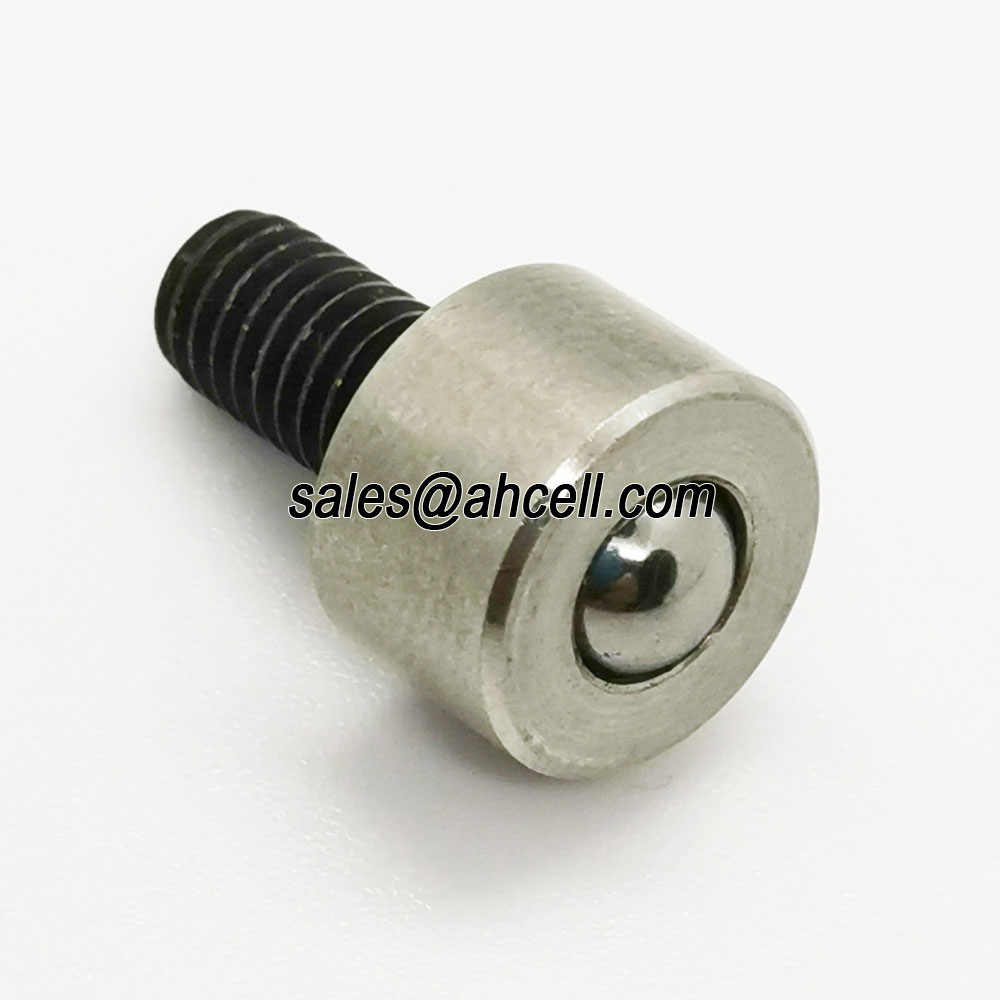
Fly disc ball transfer units from models like CY-22B through CY-75B are widely specified in airport baggage handling systems. The fly disc design promotes smooth rotation under load, which prevents baggage jams and surface damage at junction points between conveyor sections. These units support loads from light baggage diverters up to heavy cargo pallet transfer applications. The push toward greater automation in air cargo facilities, including AI-powered robotic sorting and autonomous mobile robots, requires underlying hardware that enables smooth, low-friction movement at transfer points.
Airport baggage handling system investment is accelerating. Leonardo recently announced two major BHS contracts valued at over 120 million USD combined, covering a full-scale upgrade at Houston Hobby Airport and a new system at Melbourne Orlando International Airport. The new systems include cross-belt sorters with TSA-compliant checked baggage inspection integration. Ball transfer units serve as the critical interface at sorting stations, manual workstations, and transfer points where powered conveyors meet manual handling zones. Industry reports highlight mega-hub construction and stricter IATA tracking mandates as key drivers for modernization.
Ball transfer units also integrate into aircraft cargo hold floors for rolling ULDs into position. Their omnidirectional movement allows precise guidance in confined spaces where single-axis roller systems cannot maneuver. Alwayse Engineering notes that ball transfer units are fitted to dollies and truck beds for cargo loading, eliminating the need for cranes or forklifts in many scenarios. Cargo weighing stations often embed ball transfer units into floor scales, enabling ULDs to roll on and off smoothly for accurate weight measurement before aircraft loading.
Standard load capacities for these units range from 500 kg to more than 2,000 kg per unit. Stainless steel and corrosion-resistant coating variants protect against jet fuel, de-icing fluids, and cleaning chemicals. Low-profile flange-mount and stud-mount designs allow integration into existing conveyor frames, making ball transfer units a key component for both new airport construction and legacy upgrades.