
Ball Transfer Tables in Assembly: Ergonomics and Efficiency
Manual material handling remains one of the biggest sources of workplace injuries in manufacturing and warehousing. Workers who repeatedly lift, twist, and reposition parts during assembly risk developing musculoskeletal disorders that cost U.S. businesses billions each year, according to OSHA data. Ball transfer tables offer a straightforward fix: a low-friction surface that lets operators push loads in any direction with minimal force.
A ball transfer table is a workstation surface embedded with an array of ball transfer units — each containing a large main ball supported by smaller bearings. This design allows 360-degree omnidirectional movement. Operators can rotate, reposition, or redirect parts without lifting. Some tables use pneumatic retractable balls that lower flush with the surface, creating a stable work platform when needed.
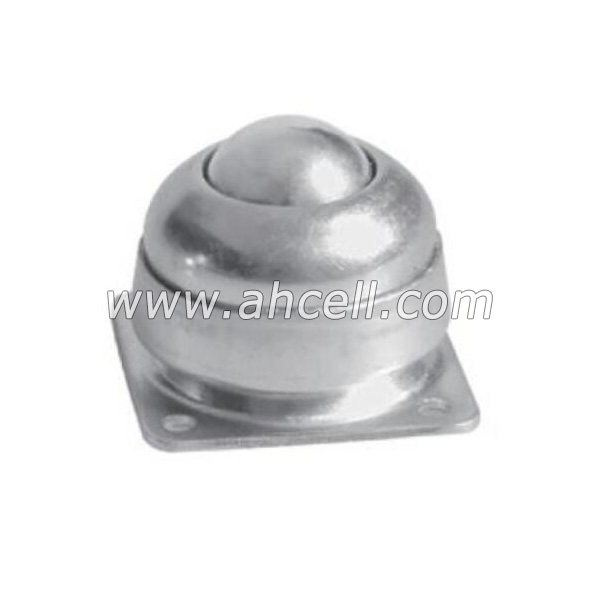
Ball transfer tables are used across automotive, consumer goods, and general manufacturing. In automotive body-in-white assembly, for example, unfinished body shells weighing 300-400 kg are moved between welding stations on ball transfer tables. Operators rotate the body 90 or 180 degrees for access to all sides without cranes or powered conveyors. Alwayse Engineering, a UK-based BTU manufacturer, reports that nylon ball units are standard in paint preparation areas, where non-marking contact surfaces prevent damage to treated panels before painting.
Smaller assembly workstations benefit too. Cisco-Eagle notes that even light loads become strenuous when repeated dozens or hundreds of times per shift. A worker nudging a 5 kg box into position 100 times a day accumulates 500 kg of cumulative push force. Ball transfer tables reduce that effort to near zero. Mallard Manufacturing offers ball center spacing of 1.5 or 3 inches, letting users match ball density to product size and precision needs. Their tables integrate with gravity conveyor lines as manual transfer and inspection points.
BOSTONtec builds custom ball transfer workstations with pneumatic pop-up units. A foot switch raises the balls for free movement, then retracts them to hold items stationary for assembly or quality checks. This live/dead switching is common on automotive assembly lines where operators need both positioning freedom and a stable work surface in the same station. Cycle times drop because workers do not stop to reposition fixtures.
Spring-loaded ball transfer units handle impact zones where parts drop onto the table from upstream conveyors. Stainless steel variants suit washdown environments in food processing. For precision assembly, surface rollers combine with ball transfers to guide items along specific axes while allowing manual rotation at transfer points.
Choosing the right ball transfer table starts with three questions: What weight per unit? How many repetitions per shift? What direction of movement? Material handling integrators typically recommend flange-mount BTUs for general assembly tables and stud-mount units for retrofit installations. Load ratings should include a safety factor; most manufacturers recommend 3:1 for dynamic loads.
Ball transfer tables are not complex equipment, but they solve a persistent problem: the physical toll of manual material handling. For facilities running assembly lines, inspection stations, or packaging work cells, adding a ball transfer table at key touchpoints reduces injury risk and keeps work moving.
- Pre:Heavy-Duty Ball Transfers Power Automotive Welding Lines 2026/6/15
- Next:Installing Ball Transfer Units: Bolt Pattern Guide 2026/6/1