
Conveyor System Innovations Driving Market Growth in 2026
The global conveyor system market reached USD 12.6 billion in 2025 and is projected to hit USD 13.1 billion in 2026, according to Global Market Insights. That 5% annual growth rate reflects how manufacturers and logistics operators are investing in smarter, more flexible conveyor technology to keep pace with rising demand in e-commerce, automotive assembly, and food processing.
Bucket conveyor systems alone account for over 29% of the market, favored in mining and agriculture where vertical material handling in tight spaces is critical. But the bigger story is how sensor-driven conveyors are becoming standard equipment. According to Universal Chain's 2026 trends report, modern conveyor lines now embed sensors and encoders that continuously track speed, temperature, load, vibration, and belt alignment. That data feeds directly into PLC and SCADA platforms, enabling predictive maintenance that can cut unplanned downtime by roughly 30%, as GM Insights notes in its market analysis.
Two corporate moves this year underline where the industry is heading. In May 2025, Vanderlande completed its USD 325 million acquisition of Siemens Logistics' airport baggage handling division, consolidating its position in high-speed sortation. Earlier, in December 2024, Continental AG launched the Conti Load Sense system, a 2D radar-based monitoring tool that measures material flow in real time on active conveyor lines. Both developments signal a shift from simple mechanical transport toward intelligent sorting and monitoring.
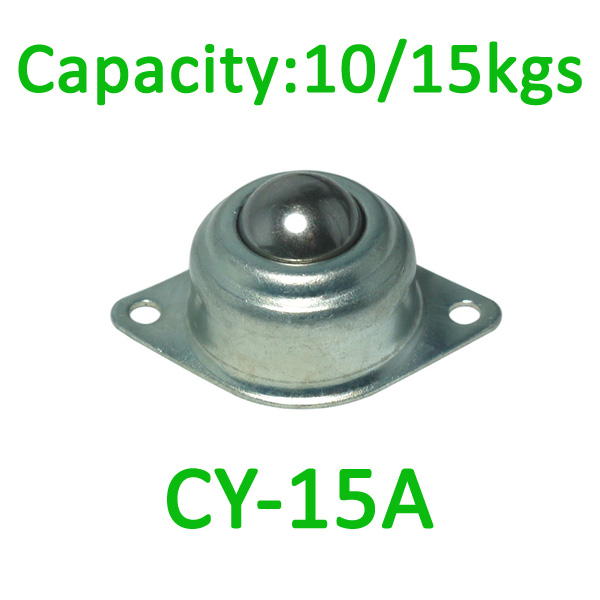
Modular conveyor design is another area gaining traction. Reconfigurable aluminum-framed systems and modular plastic belt conveyors let manufacturers reconfigure production lines in hours rather than weeks. The payoff is real: fewer spare parts to stock, lower lifecycle costs, and faster installation when new SKUs enter the mix. Ball transfer units like the flange-mount and stud-mount varieties play a specific role here, enabling smooth 360-degree rotation at conveyor junctions and transfer points where directional changes happen.
Motor Driven Roller (MDR) technology is trimming energy bills too. By powering only the rollers that need it and running the rest on gravity or low-friction belts, MDR systems reduce conveyor power consumption by 30-40%. Combined with recyclable belt materials and longer-life components, these efficiency gains align with the broader push for lower operating costs across warehouse and factory floors. The conveyor market is moving from pure transportation to integrated, data-driven sorting, and the companies betting on that shift early will see the returns first.