
Spring Loaded vs Fixed Ball Transfer Units: When to Use
Choose a fixed ball transfer unit when the load is predictable and the surface is flat; choose a spring-loaded unit when loads drop onto the table, run uneven, or change weight. According to Essentra Components, spring-loaded ball transfers are designed to minimize damage from shock loads, accommodate dimensional changes from temperature, and self-adjust so load distributes evenly across the array.
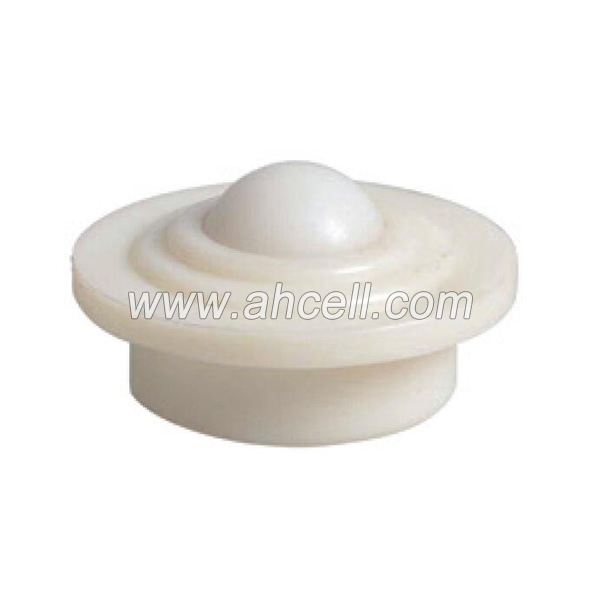
How the two designs differ
A fixed unit bolts solidly to the frame. The main ball rides on support bearings in a rigid housing, so its height never changes under load. A spring-loaded unit adds a spring between the housing and the mounting surface, letting the ball depress when weight lands and rebound when the load leaves.
That one mechanical difference changes which application each unit suits. Fixed units give a stable, level conveying plane and full rated capacity with zero deflection, which matters for precision surfaces and consistent product flow. Spring-loaded units trade a little stability for shock absorption and load sharing.
When fixed units win
- Even, rigid loads on clean flat-bottomed containers
- Precision transfer tables where ball height must stay constant
- Continuous conveyor decks carrying uniform product at speed
- Applications where the lowest possible cost per unit matters
When spring-loaded units win
- Presses, guillotines, and molding machines, where parts drop or slam onto the table
- Uneven load bottoms, since each spring compresses independently to share weight
- Temperature-varying environments, where thermal expansion changes product dimensions
- Mixed loads with different weights traveling the same table
Tuli Shop, a European distributor of Alwayse ball units, states the case plainly: spring-loaded units reduce damage caused by shock loads, allow for dimension changes due to temperature, and self-adjust to evenly distribute loads. KIPP USA notes that spring elements distribute loads evenly when goods travel on an uneven running surface, and its electro-zinc-plated steel units are common in guillotine and press-brake tables.
Real spring-loaded ratings
Spring deflection is a published spec, not a guess. Omnitrack's MN series shows the trade: the MN12 supports 40 kg with 1.5 mm deflection, the MN25 supports 100 kg, and the MN30 supports 335 kg, with load at maximum deflection reaching 585 kg for the MN30. Bodies are machined from solid steel and case hardened, balls are AISI 52100, and units run from -30 degrees C to +100 degrees C. Heavy-duty spring units like the T-bar series spread load across multiple spring-loaded balls, with a T-20 bar carrying 494 lbs at 0.102-inch deflection.
Cost follows capacity. WDS Components lists light-duty spring-loaded units from about 8 GBP and high-capacity units with internal or external springs from 28 to 33 GBP, in steel or stainless ball versions. For very light work, igus offers maintenance-free plastic ball transfers rated to 225 lbs (1,000 N) with glass balls available for non-magnetic requirements.
FAQ: can a spring-loaded unit replace a fixed one?
Only if you accept deflection. If the conveying plane must stay level within fractions of a millimeter, keep fixed units and handle impact with guards or cushioning elsewhere. If the problem is broken units, scratched loads, or uneven weight distribution on a mixed line, switching to spring-loaded units usually fixes all three, because each ball adjusts independently to the load above it.
Ahcell produces both styles, from the fixed SP-22 stud-mount unit to the KSH-19 spring-loaded heavy-duty unit for impact zones. A quick rule of thumb: fixed for uniform flow, spring-loaded where the load lands hard, rides rough, or changes weight. Send the load profile and table layout to engineering support and the right selection follows.
- Pre:No Information
- Next:Ball Transfers for CNC Machine Tool Loading and Unloading 2026/10/26