
Ball Transfers for CNC Machine Tool Loading and Unloading
Ball transfer units mounted in a machine table let operators slide heavy workpieces, fixtures, and sheet-metal blanks into a CNC machining center in seconds instead of minutes. According to Essentra Components, ball transfer units are specified for machine loading and machine tables precisely because a load-bearing ball rotating on smaller support bearings lets an item travel in any horizontal direction with minimal friction.
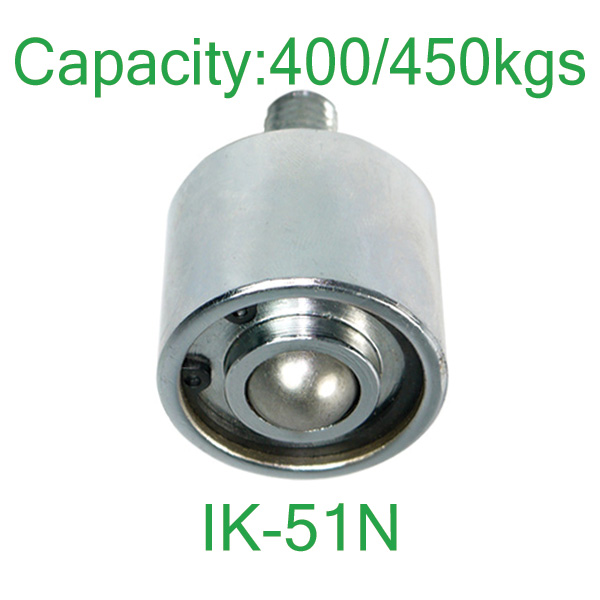
Why machine loading tables use ball transfers
A CNC operator's non-cutting time is pure cost. Every minute spent hoisting, sliding, or aligning a workpiece is a minute the spindle stands still. A ball transfer table converts that handling into a simple push, because the load rides on rolling steel balls rather than dragging across a bare table surface.
Omnitrack, the UK manufacturer that introduced heavy-duty recirculating ball units in 1954, rates its heavy-duty range at 8,000 kg (16,000 lbs) per unit and quotes a friction ratio of 1:0.005, meaning breakaway force is less than 0.5 percent of the conveyed load. A 500 kg fixture therefore needs only a few kilograms of push to move, which sits well within manual handling limits.
Typical machine-loading positions
- Feed tables for sheet-metal working machines, noted by Speedrack West alongside fixtures for press brakes
- Machine tables and loading stations on CNC lathes and machining centers, listed by Essentra
- Guillotine and press-brake support tables, where spring-loaded units hold sheet while the blade cycles
- Inspection and staging tables beside the machine for incoming blanks and finished parts
KIPP USA describes spring-element ball units used in guillotines and press brakes: the unit supports the sheet during machining, and when the process finishes, the spring element springs back and lets the workpiece roll off. That same pop-up behavior suits CNC loading tables where the workpiece must rest still for clamping, then roll free for removal.
Load capacity and spacing
Capacity planning follows the load, not the table. Essentra's heavy-duty range carries 25 to 500 kg ball-down, while its Euro ball series rates 10 to 610 kg ball-up across a -30 degrees C to 70 degrees C window. A 600 mm square workpiece on a four-unit cluster needs units rated above 150 kg each to keep the table within rating. Bosch Rexroth publishes friction coefficient diagrams because selection depends on load and speed, and its units run conveyor speeds up to 2 m/s.
Orientation matters too. Heavy-duty units from Omnitrack hold full rating at any angle, which is why machine builders mount them ball-down for overhead tooling rails and ball-up for table decks. The 84 and 94 series carry external springs with adjustable preloads, letting engineers tune support force for the specific workpiece weight.
FAQ: do ball transfers hold position during clamping?
No, a free-rolling ball does not clamp. Machine tables pair ball transfers with retractable units or simple locks: pneumatic or spring-retracted units drop below the table surface for stable clamping, while fixed units suit stations where the part stays put by gravity and friction once motion stops. Many builders use a mix, with fixed units for travel and spring-loaded units at the load zone to absorb the drop of a heavy blank.
Ahcell builds the CY-15A flange-mount unit for light machine-side staging and the SP-38 stud-mount unit for dense loading arrays, with stainless versions available where coolant splash is routine. Matching unit rating, ball diameter, and pattern to the heaviest workpiece keeps the table safe and the spindle turning.
- Pre:No Information
- Next:Ball Transfer Tables for Palletizing and Depalletizing 2026/10/19