
Ball Transfer Tables for Palletizing and Depalletizing
Ball transfer tables cut palletizing cycle time by letting one operator rotate, align, and reposition a loaded pallet in any direction without lifting equipment. According to Mallard Manufacturing, a gravity-flow specialist with more than 60 years of conveyor experience, a ball transfer table placed at a palletizing station lets workers direct pallets anywhere within a 360-degree radius, turning the most repetitive part of pallet building into a one-person task.
What a palletizing station needs
Palletizing stations sit between the production line and the warehouse, so loads arrive fast and must leave squared and stable. The cycle usually starts with an empty pallet, then boxes, totes, or bags build layer by layer until the unit is complete and stretch-wrapped. Every hand-off in that cycle benefits from an omnidirectional surface, because the pallet must spin 90 degrees, slide sideways, and square up against guides without heavy pushing.
Hytrol and Conveyors & Drives build ball transfer tables specifically for this duty. Their standard range runs from 1 to 10 feet long in 6-inch increments, with widths from 12 to 60 inches, and ball centers in 2, 3, 4, or 6-inch square patterns. Individual unit ratings climb from 75 lbs for a 1-inch ball to 250 lbs for 1-1/4 and 1-1/2 inch balls, which covers loaded pallets when the table uses a dense pattern under the load footprint.
Retractable balls turn the table into a work surface
Fixed units roll the load continuously, but palletizing demands stability while layers are placed. Pneumatic or spring-retracted ball transfers solve that conflict. BOSTONtec describes tables where pneumatic units retract below the flange with a foot or hand switch, creating a flat surface for stable stacking, then pop up again to push the finished pallet away. LiftPro Equipment sells a semi-powered ball transfer conveyor table for palletizing and depalletizing where the balls retract automatically when the table lowers, which speeds both loading and unloading of heavy product.
Key benefits at the pallet station
- 360-degree rotation removes forklift or pallet-jack repositioning between layers
- Lower pushing force reduces ergonomic strain; BOSTONtec lists lifting, pushing, pulling, and twisting as the manual actions ball tables eliminate
- Retractable designs give a solid surface for stacking, then restore free movement for transfer
- Floor-mounted mats with slip-resistant low-profile wheels handle dock staging and intake
Capacity planning starts with the heaviest pallet, not the average one. A ball transfer conveyor engineered for air-cargo service, documented by IASMN, transfers and stores 463L pallets weighing up to 10,500 pounds fully loaded without deformation. Industrial pallet stations rarely approach that figure, but the example shows what a correctly sized steel-frame deck with dense ball spacing can hold.
Layout options
Mallard offers its tables in 12-inch sections with 1.5- or 3-inch wheel centers, so stations can be built to size. Average pallet stations run 50 to 60 inches wide, or four to five sections. Raised tables suit ergonomic access for kitting and assembly, while floor-mounted decks integrate with gravity conveyor for push-assisted flow.
FAQ: can one table serve both palletizing and depalletizing?
Yes, and that is common. Depalletizing inverts the task: the operator or robot pulls layers off a stacked load, and the table must keep the shrinking load easy to spin and square. A retractable ball table works for both directions, because the operator can lock the surface flat for stacking or stripping, then release the balls to move the load. Select ball diameter and pattern from the heaviest single load, then confirm the frame matches floor conditions.
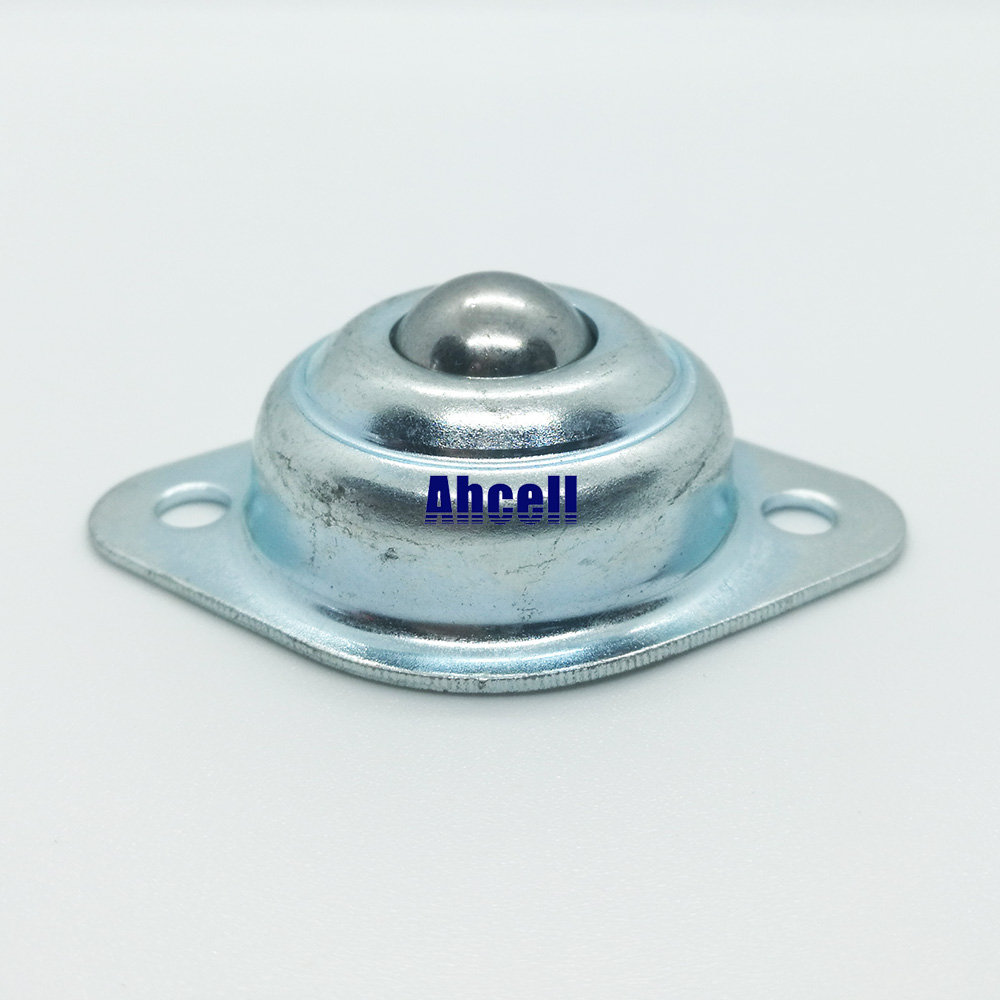
Ahcell supplies ball transfer units for palletizing tables in both fixed and spring-loaded styles, including the SP-22 stud-mount unit used in dense table arrays. Engineering support covers pattern spacing, load ratings, and frame design so the finished table matches the station's real throughput.
- Pre:No Information
- Next:Ball Transfers for Heavy Rotating Platform Turntables 2026/10/12