
Conveyor Direction Change Systems: 4 Methods Compared
Changing product direction on a conveyor line sounds simple until you factor in package size variation, throughput requirements, and the physical constraints of your facility. The wrong method creates bottlenecks; the right one keeps the line moving without costly rework. Four approaches dominate modern conveyor direction change: ball transfer tables, motorized ball sorters, active roller belt systems, and omnidirectional transfer units. Each suits different conditions.
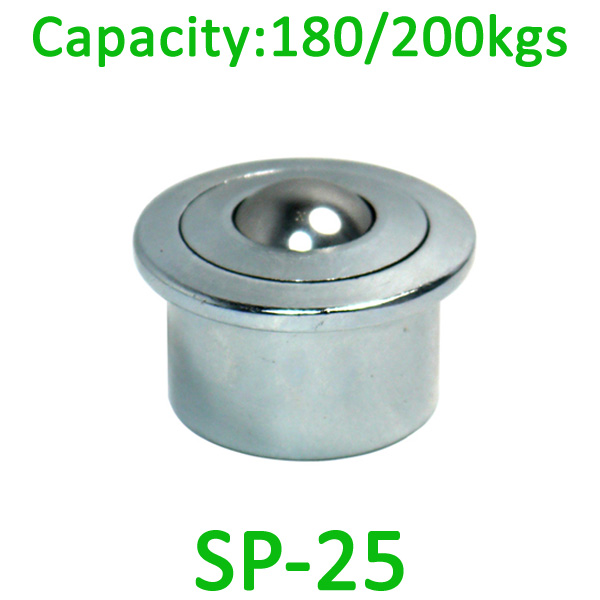
Ball transfer tables remain the most straightforward option. FMH Conveyors' BestConnect modular system uses steel balls set on 2.85-inch diagonal centers across a 24-by-33-inch surface, rated at 50 pounds per foot. Operators rotate and redirect packages manually at conveyor line splits, and the table section rolls on lockable casters for quick repositioning. Drop-in ball transfer surfaces are also available, fitting directly into the end of a straight conveyor section where rollers would normally sit. Ashland Conveyor specifies that a minimum of five ball units should support any single load, with ball spacing between 2 and 6 inches depending on package rigidity.
For automated sorting at higher throughput, KRAUS Austria offers the MABS (Multi Angle Ball Sorter). This 24 VDC motorized ejector uses Itoh Denki POWER MOLLER technology and ejects products at 30, 45, or 90 degrees without any pneumatic components. Multiple MABS units combine to handle items as small as 100 by 150 mm and up to 30 kg, with conveyor widths from 398 to 798 mm. The module stands just 175 mm tall, fitting into overhead or multi-tier conveyor layouts. KRAUS also produces ball bearing turntables with manual locking bolts or chain-driven rotation up to 180 degrees, and central-drive units allowing free positioning for any angle.
Active roller belt technology takes a different approach. Innoveyance's Directional Active Roller Belt (DARB), built on Intralox Activated Roller Belt technology, uses belts containing two rollers mounted one atop the other to divert corrugated bundles left or right while the belt continues forward. Transfer rate hits 20-plus bundles per minute at a 1:1 ratio with inline conveyor speed, making it well suited for dual load-forming operations and non-conforming product diversion in the corrugated and folding carton sector.
The most versatile direction change hardware is the omnidirectional transfer unit. Avancon's OTU-2 module measures 75.4 by 75.4 by 133 mm and connects like dovetails to build tables of any size for switches, corners, crossings, and sorters. Stainless steel spindles run on precision 2RS ball bearings inside high-tech polymer housings. Two axial-flux BLDC motors drive up to eight OTU bricks, moving goods at up to 0.3 m/s for 40 kg loads or 1.5 m/s for 35 kg items. The entire structure including motors and controls reaches just 236 mm in height. Avancon reports OTU installations at Samsung in South Korea and at an ASRS high-bay warehouse in northern Italy, where the same OTU module handles switches, crossings, and sorters without design changes between applications.
At MODEX 2026, Roach Conveyors launched the CrossX easy-transfer roller, which allows cartons, totes, and irregular loads to change direction in a manner similar to a ball transfer but within a powered roller format, expanding handling capabilities where passive ball tables cannot keep pace with line speed.
Selecting the right direction change method depends on three variables: throughput volume, load characteristics, and available installation height. Ball transfer tables handle manual rotation at low cost. Motorized sorters like the MABS automate ejection without pneumatics. Active roller belts divert flat-bottom goods at high speed. Omnidirectional units such as the Avancon OTU-2 consolidate multiple direction-change functions into one modular platform, reducing design complexity and spare parts inventory across the entire conveyor system.
- Pre:Conveyor Transfer Point Maintenance: Reducing Spillage 2026/5/20
- Next:Ball Transfers in Medical Cart Design: Rotation and Mobility 2026/5/18