
Steel Coil Handling: Ball Transfer Units Reduce Manual Risks
Steel coils weighing 10 to 50 tons are among the hardest items to handle in any metals plant. Their cylindrical shape makes them prone to rolling, and a single slip from a forklift tine can scratch or dent the outer layers of pre-painted galvanized steel, turning thousands of dollars of material into scrap. Overhead cranes with chains add another hazard: the swinging load is unpredictable, and chains can fail without warning.
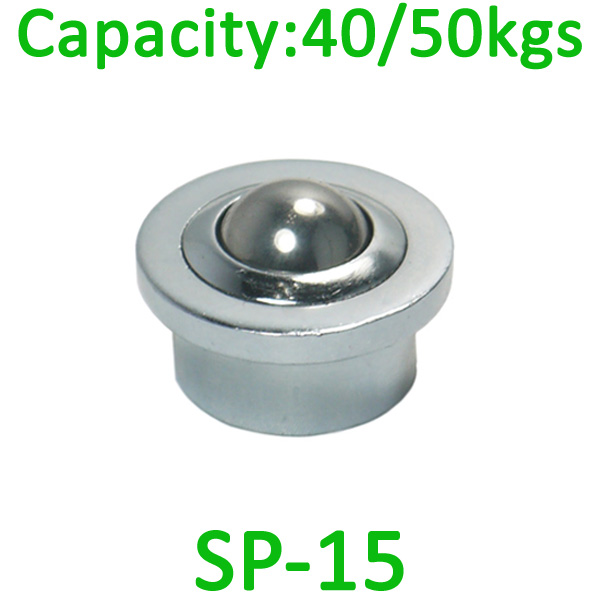
Ball transfer units offer a different approach. Instead of lifting coils into the air, they keep the load grounded on a low-friction surface where operators can push, rotate, and reposition by hand. A typical steel coil rotation table uses an array of heavy-duty ball transfers spaced on 1.5 to 3 inch centers, depending on coil weight and contact area. Mallard Manufacturing, for instance, builds ball transfer tables in 12-inch modular sections that connect directly into gravity conveyor lines, letting workers rotate coils 360 degrees without mechanical assist.
The load ratings matter here. Omnitrack's heavy-duty 9000 series ball transfers handle up to 8,000 kg per unit with a friction ratio below 0.005, meaning a 10-ton coil resting on a table of 20 units can be pushed with roughly 50 kg of force. The same series operates from -50 to 260 degrees Celsius, which covers the temperature range found near annealing furnaces and coil coating lines. Omnitrack originally designed these units in 1954 for British Steel, where they handled drums of molten steel at 150 degrees Celsius.
At the coil loading station, ball transfer tables solve a specific bottleneck. Fhopepack reports that changing a coil with overhead cranes takes 20 to 30 minutes, while a dedicated transfer cart with a V-shaped deck can cut that to under five. Adding ball transfers to the cart deck lets operators fine-tune coil alignment on the decoiler mandrel without repositioning the entire cart. For plants running multiple shifts with dozens of changeovers per week, the time savings compound fast.
Industrial Kinetics, a conveyor systems manufacturer in Downers Grove, Illinois, designs heavy-duty transfer cars that move coils across aisles between crane bays. Their systems use structural steel frames rather than bent metal, and every installation goes through factory acceptance load testing before shipment. The company's chain-driven live roller conveyors handle point loads from coils exceeding 10,000 pounds, and their engineering process calculates point loading and structural integrity to maintain a high safety factor.
Selecting the right ball transfer for coil handling starts with three numbers: the maximum coil weight, the contact area of the coil's flat face on the table, and the ambient temperature at the installation point. Ahcell's SP series covers ball diameters from 8 to 90 mm in flange-mount configuration, while the BTFM series extends to 254 mm balls rated for the heaviest coils. Specifying units with drain channels and felt seals helps in environments where scale, dust, or coolant are present, since debris is the primary cause of premature ball transfer failure in steel plants.