
Ball Transfer Units Speed Up Packaging Direction Changes
Packaging lines run on precise product flow. When cartons, trays, or shrink-wrapped bundles need to rotate 90 degrees for labeling or change direction between conveyors, the transfer method determines whether the line keeps moving or stalls. Ball transfer units have become a practical solution at these transition points, offering omnidirectional movement that mechanical pushers and pop-up rollers cannot match.
According to Noreside Engineering Group, 90-degree transfers are among the most common redirect methods in packaging and bottling systems. Traditional approaches use pushers, turntables, or pop-up powered rollers. Each has trade-offs. Pushers need space for the mechanical arm stroke. Turntables handle heavy loads like pallets and drums but rotate slowly. Pop-up transfers require motorized rollers and controls. Ball transfer tables offer a simpler alternative: an array of low-friction ball units mounted flush in a flat surface lets operators or automated systems rotate and redirect packages in any direction without powered mechanisms.
Bosch Rexroth highlights five selection criteria that directly affect packaging line performance. Friction coefficient matters first: lighter packages moved by hand need different units than heavy cartons on powered sections. Rexroth ball transfer units achieve conveying speeds up to 2 m/s, with friction coefficient diagrams that simplify the selection process. Installation position is the second factor. While most units mount ball-up in a conveyor bed, Rexroth units work overhead, sideways, or at angles without losing load capacity. For packaging environments, this means the same unit type can serve on horizontal tables and vertical accumulation sections.
Ambient conditions rank third on the Rexroth list. Packaging lines in food processing face washdown cycles with water, detergent, and temperature swings. Ball transfer units rated from -30 to 100 degrees Celsius with oil-soaked felt seals protect against contamination, a detail that matters when units sit near filling stations or labeling equipment. Lutco, a US-based manufacturer, notes that ball transfer units operate without lubricant, making them suitable for both freezing and cooking processes where standard conveyor components would seize up.
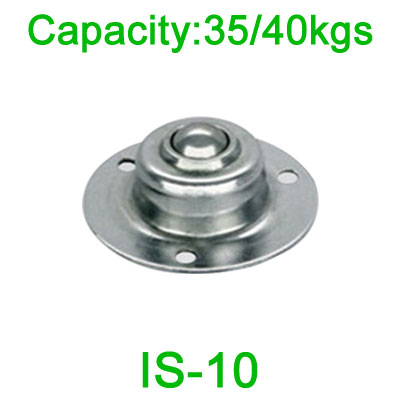
Load capacity and service life calculation round out the selection process. Rexroth provides a formula in their catalog to calculate individual unit service life based on load and speed, which helps maintenance teams plan replacements before failures cause downtime. For packaging lines running two or three shifts, this predictability directly impacts throughput. CY-A series flange-mount units with ball diameters from 15mm to 38mm cover the light-load range common in packaging and sorting, while IS-series insert units like the IS-10 allow compact drop-in installation in existing conveyor frames.
At merge points where two packaging lines feed into one, or at inspection stations where operators rotate packages for quality checks, ball transfer tables reduce manual lifting and repositioning. The result is fewer repetitive strain injuries and faster cycle times, both measurable improvements on a packaging floor that ships thousands of units per shift.
- Pre:Ball Transfers in Food Conveyors: Washdown Standards 2026/5/13
- Next:Ball Transfer Tables Cut Strain at Assembly Workstations 2026/5/11