
Mold and Die Handling: Ball Transfer Tables Cut Injury Risks
Injection molds weighing 40 tons are daily reality at major automotive plants. An Austrian manufacturer producing 1.9 million small parts and 500,000 large parts monthly handles molds that size on a regular basis, using omnidirectional transfer carts to move them between stations. At that scale, the ability to rotate and reposition heavy dies without lifting isn't optional. It's a safety requirement.
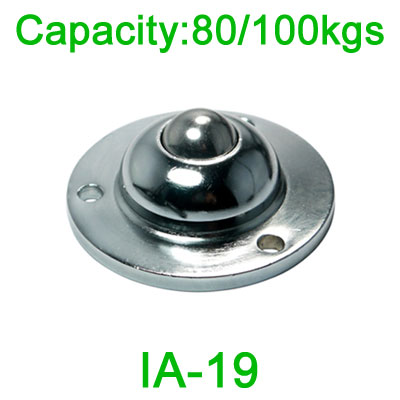
According to OSHA, ergonomic injuries cost U.S. businesses billions in lost productivity and healthcare costs each year. Ball transfer tables address this directly. A grid of omnidirectional rotating balls lets a single worker push, rotate, and position heavy flat-bottomed items — molds, dies, fabricated components — without the twisting and team lifting that cause strain injuries.
BOSTONtec builds ball transfer tables with pneumatic retractable balls. When pressed, a foot or hand switch retracts the balls below the flange, converting the table into a flat, stable surface for detailed assembly or quality inspection. This dual-mode design handles both repositioning and precision work on the same station. Mallard Manufacturing offers tables with 1.5-inch or 3-inch ball centers, configurable for everything from light assembly to heavy-duty material handling, with food-grade stainless steel options for washdown areas.
For die and mold handling specifically, the load capacity of individual ball transfer units determines the table's working range. Heavy-duty flange-mount units like the SP series (ball diameters from 8 mm to 90 mm, rated up to 4,000 kg per unit) handle mid-range dies. Ultra-heavy applications like large stamping dies and compression molds call for the BTFM series with ball diameters up to 254 mm and 8,000 kg capacity per unit. Both comply with ISO 15299 dimensional standards.
Fifteen-ton trackless transfer carts now pair with ball transfer surfaces for combined transport and rotation. Equipped with laser sensors, safety touch edges, and dual wired plus wireless remote control, these systems let operators keep a safe distance while moving dies across the shop floor. The ball transfer table at each end station receives the die and allows 360-degree manual rotation for alignment, inspection, or storage positioning. No crane needed.