
Ball Transfer Tables for Order Picking and Manual Sortation
Ball transfer tables have become a standard fixture at warehouse order-picking and manual sortation stations because they let a single operator rotate, reposition, and redirect cartons or totes in any direction without lifting. According to material handling supplier Cisco-Eagle, these low-friction surfaces cut strain and repetitive motion at packing stations, inspection zones, and conveyor intersections, where a worker may nudge or rotate a box well over 100 times a shift. For e-commerce and distribution centers that rely on manual picking, the ball transfer table is often the fastest low-cost upgrade to a work cell.
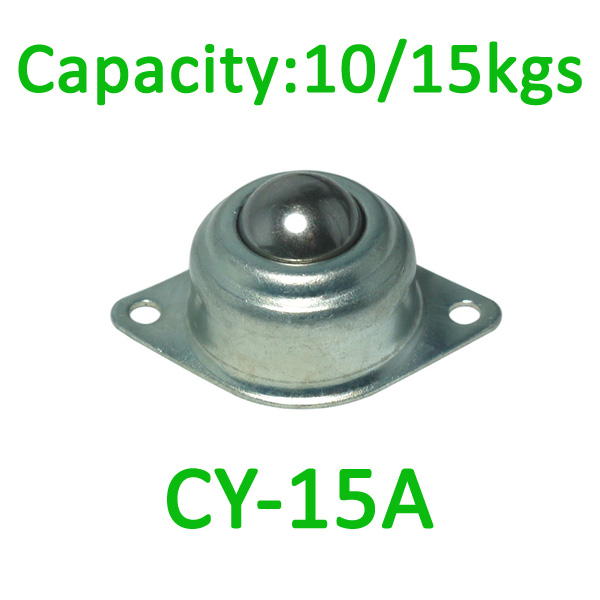
A ball transfer table is a flat work surface fitted with rows of ball transfer units. Each unit is a large load ball mounted in a housing and rolling on many small support balls, so it spins freely in any direction. That construction gives the operator 360-degree control over the product, which is what separates it from a roller conveyor. Shelving.com notes that roller conveyors move items in one primary direction, while ball transfer tables allow forward, backward, sideways, diagonal, and rotating movement. According to Wikipedia, the ball transfer unit was first patented by Autoset Production Ltd in 1958, and arrays of units form the ball transfer tables used as a type of conveyor system.
Where ball transfer tables fit in a picking operation
Order picking involves constant handling. Every carton gets scanned, packed, sealed, or transferred at some point, and each step is a chance to lift, twist, or drag. Mallard Manufacturing, a gravity conveyor builder with more than 60 years of experience, lists packing and shipping, inspection stations, assembly work cells, and receiving docks as the main spots where ball transfer tables earn their keep. The tables work especially well in lean manufacturing and one-piece flow environments, where the operator must reposition the same product many times.
Common picking and sortation uses
- Packing and sealing stations, where boxes must be rotated for taping and labeling
- Scanning and weighing points between conveyor sections
- Inspection stations, where all sides of a product must be checked
- Merge and direction-change points where gravity conveyor lines meet
- Pick carts and flow racks, where totes are turned for easy access
Ball spacing and load support
Ball spacing decides whether a package glides or snags. Conveyor parts supplier Speedrack West specifies a 1-inch steel ball in a 1-13/16-inch housing with a 1/4-20 mounting bolt, rated at 50 lb per ball, with the maximum unit load not exceeding 200 lb, the capacity of four balls. For boxes and cases with a uniform, smooth undersurface, spacing is found by dividing the minimum package dimension by 2.5, with at least 9 ball casters supporting each package. Smaller or less rigid loads need tighter spacing, while large, stable loads can ride on wider grids. Mallard offers tables with 1.5-inch or 3-inch ball centers to match the load.
The ergonomics argument
The business case is about injuries as much as throughput. According to OSHA, ergonomic injuries cost U.S. businesses billions of dollars every year in lost productivity and healthcare costs. Retractable units add another layer: pneumatic ball transfers can drop below the table flange with a foot or hand switch, leaving a flat work surface when the operator needs one. That flexibility makes a ball transfer table a practical choice for stations that alternate between assembly and transfer work.
How to choose a ball transfer table for picking?
Start with the smallest package the station handles, divide its shortest dimension by 2.5 to get ball spacing, and confirm that at least four balls sit under the load at all times. Match the unit material to the environment: zinc-plated carbon steel for dry warehouse work, stainless steel for washdown areas, and nylon balls for scratch-sensitive surfaces. For tabletop installation, flange-mount units such as the Ahcell CY-15A press into drilled holes, while spring-loaded series absorb impact at high-traffic sortation points. Ahcell, a China-based ball transfer manufacturer, supplies flange-mount and spring-loaded units from light duty up to 4000 kg heavy-duty classes.
Manual picking is not going away in most warehouses, and neither is the need to move product in more than one direction. A ball transfer table removes the twisting and dragging that slow pickers down, and it does so with no motor, no wiring, and almost no maintenance. For most operations, the payback comes in the first few months.
- Pre:No Information
- Next:Ball Transfer Units for Steel Coil Turntable Rotation 2026/8/31