
Ball Transfers Keep Airport Baggage Moving at Junctions
Every bag that flies passes through a maze of junctions on the ground. Airport baggage handling systems are networks of hundreds of conveyor belts, and at each junction a decision is made: let the bag pass, or push it onto another line. Computers make that call in modern systems, but the physical transfer still depends on components that can change direction without friction.
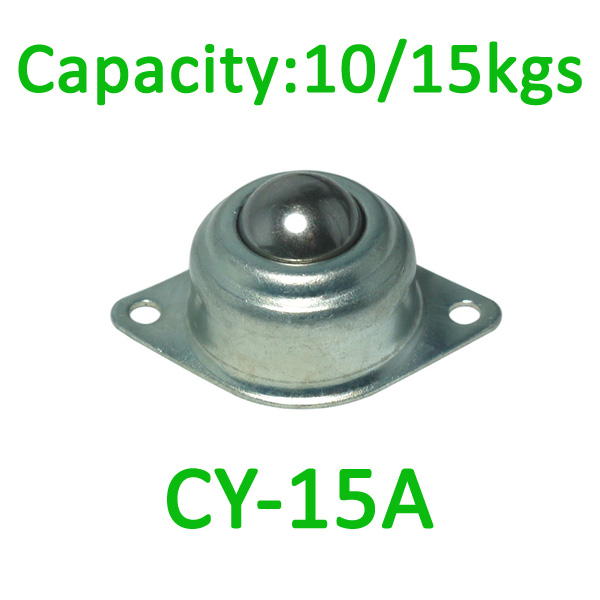
Ball transfer conveyors fill that role. They are built from arrays of ball transfer units, and they let baggage change direction with minimal friction. Sorting and transfer systems form the logistical backbone of multi-terminal airports, and omni-directional transfer stations give designers a simple, flexible way to route bags through tight baggage halls.
The scale of the problem is easy to underestimate. Delta Air Lines fitted more than 600 RFID readers across 84 airports to tighten baggage tracking, a project that shows how much data modern hubs push through their physical conveyor networks.
Baggage handling technology has come a long way since 1971, when BNP Associates installed the first automated system. Today, BEUMER Group describes three main technology families: conveyor-based transport for loose bags, tilt-tray sorters that give each bag its own tray, and high-speed Independent Carrier Systems (ICS), where every bag rides in its own cart or tote for the entire journey. ICS containers carry RFID tags, which are easier to read than a luggage label hidden behind the bag itself.
At the transfer points, the engineering is surprisingly precise. Lutco, a US manufacturer, builds air cargo ball transfers that fit the industry-standard 1.75-inch mounting hole used in cargo decks. A machined steel cup holds a polished stamped inner race, and weep holes drain away liquids and debris. Stainless steel balls give all rolling elements complete corrosion protection.
The common thread is omnidirectional movement.
Those units do heavy work. Air cargo ball transfers move ULDs, pallets, and heavy freight across loading bays and aircraft decks, where downtime is measured in missed departures. In baggage halls, lighter pressed-steel units such as the CY-15A handle the gentler job of routing suitcases between belts.
Whether a bag weighs 20 kilograms or a pallet weighs two tonnes, the load must slide sideways, rotate, and change direction on demand. Ball transfer units do this in a single motion, which is why they appear at merge points, sortation nodes, and transfer stations from check-in to the carousel.
Reliability is the airport's real requirement. A jam at one transfer point ripples through the entire network, and manual intervention during peak hours is expensive. Simple, sealed ball transfer units reduce both, which is why airports keep specifying them even as software and sensors grow smarter.
- Pre:No Information
- Next:Stainless Steel Ball Transfers Built for Food Washdown Duty 2026/8/10