
Ball Transfer Bearing Market Growth and Innovation in 2026
The ball transfer bearing market is experiencing sustained growth in 2026, driven by expanding demand from electric vehicles, robotics, and smart manufacturing sectors. According to PGN Bearings' 2026 market analysis, the bearing industry is entering a new phase where technological innovation and industrial automation are primary growth catalysts. The automotive sector remains the largest global consumer of bearings, with EVs representing the fastest-growing segment requiring high rotational efficiency and low friction performance.
Metoree's April 2026 ranking identifies SKF, igus, and Omnitrack as leading ball transfer manufacturers. SKF, headquartered in Gothenburg and founded in 1907, serves aerospace, agriculture, food and beverage, and material handling industries. igus offers polymer-based ball transfer units with ISO 9001:2015 certification, while Omnitrack LTD, established in 1909 in Stroud, England, specializes in pneumatic ball transfer units for defense and automotive applications. The global ball bearing market for automotive transmission alone is projected to grow at a 4.8% CAGR through 2033, per LinkedIn industry analysis.
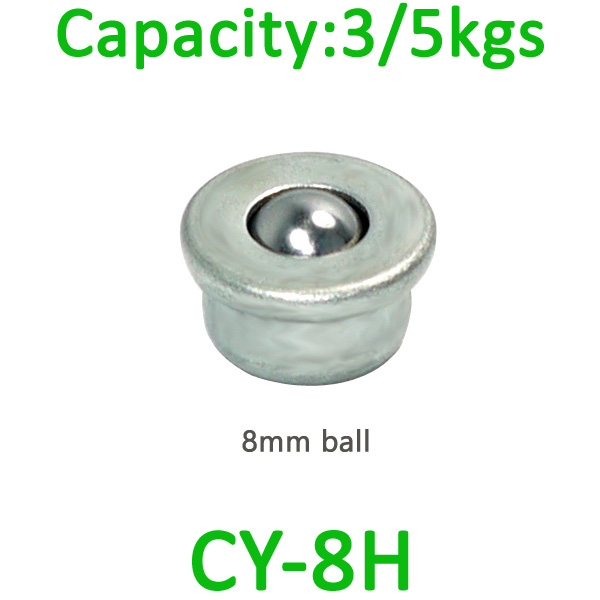
Ball transfer bearings differ from traditional radial bearings by enabling multi-directional, 360-degree movement of flat-bottomed loads. STR Industries notes that BTUs are optimal for conveyor tables, baggage handling systems, sheet metal processing, and pallet docks — any application where items need repositioning without lifting. The friction coefficient of ball transfer units at 1 m/sec is approximately 0.005 μ, according to Elesa technical data, making them highly efficient for manual material handling operations.
When selecting ball transfer bearings, engineers should calculate loading by dividing the transported weight by three, as specified by norelem mounting instructions. Maximum spacing between units equals the smallest load dimension divided by 2.5. For environments exceeding 60°C, units with plastic components require temperature derating. Advanced steel alloys and optimized internal geometries are extending bearing service life while reducing heat generation — particularly important for continuous-operation EV drivetrain applications.
As manufacturing facilities automate sorting, packaging, and assembly processes, the demand for reliable ball transfer bearing solutions continues to climb. Choosing the right specification — considering load capacity, operating temperature, and mounting style — directly impacts conveyor system uptime and total cost of ownership.
- Pre:2026 Material Handling Solutions: Adaptability Drives Growth 2026/4/28
- Next:Ball Transfer Units in 2026 Material Handling Growth 2026/4/26