
2026 Material Handling Solutions: Adaptability Drives Growth
The global material handling equipment market reached $215.97 billion in 2025, nearly $75 billion above 2021 forecasts, according to Global Industry Analysts via PR Newswire. That gap between prediction and reality tells a story: demand for smarter, faster material handling solutions is outpacing even optimistic estimates. BUILT Systems reports that material handling now accounts for 20–30% of total manufacturing labor costs, making efficiency gains in this area a direct lever on profitability.
Adaptability has become the defining requirement for material handling systems in 2026. Facilities can no longer afford rigid layouts that require multi-week shutdowns for reconfiguration. Modular equipment, standardized components, and scalable conveyor layouts allow operations to absorb volume swings and product-mix changes without starting over. ManufacturingTomorrow reports that microfulfillment sites under 50,000 square feet — with rack-climbing bots and cubic storage grids achieving 400–600 bins per 1,000 square feet — can break even in under three years, even with rental premiums on urban locations.
Automation is delivering measurable returns where processes are stable first. BUILT Systems notes that well-designed automated operations see throughput and labor productivity gains of 30% or more. But the principle is clear: automation does not correct unstable processes. Facilities that standardize manual workflows before adding conveyors, AGVs, and AS/RS systems get far better results than those that automate chaos. Align Production Systems identifies four forces shaping investment decisions this year: safety-driven design, practical application-focused automation, electrification of transport equipment, and flexible engineering approaches for heavy or irregular loads.
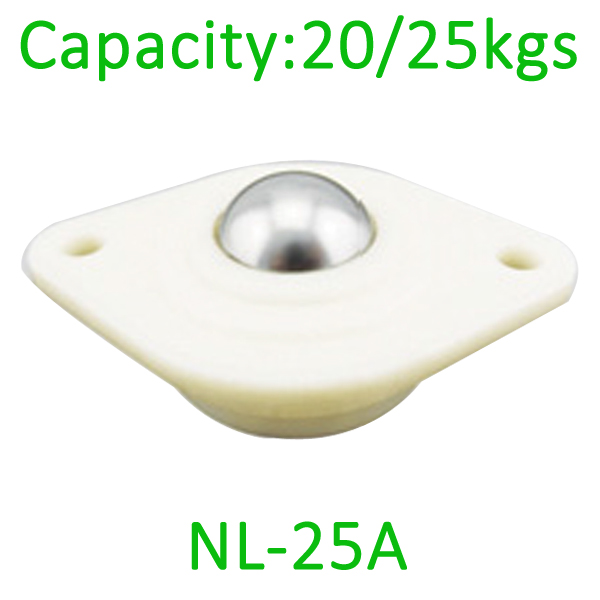
Electrification and sustainability are accelerating together. Electric forklifts and battery-powered transporters offer better precision and lower maintenance than combustion alternatives, while containerized battery energy storage systems for industrial use are projected to grow at 22.1% CAGR through 2030. For conveyor-intensive operations, ball transfer units — such as the stud-mount and flange-mount configurations from manufacturers like Interroll and Alwayse — remain essential for smooth omnidirectional movement at transfer points, sortation zones, and assembly workstations. Selecting the right ball transfer specification for load capacity and environment directly affects uptime across the entire handling system.
The bottom line for 2026: material handling solutions that prioritize adaptability, safety, and practical automation are delivering the strongest returns. Facilities that design for change — rather than optimizing for a single static scenario — will handle whatever volumes and SKUs come next.