
Light Load Ball Transfers Boost 2026 Warehouse Efficiency
The global ball transfer unit market reached USD 1,521.1 million in 2024 and is projected to grow at 9.10% CAGR through 2031, according to Cognitive Market Research. Within this expanding sector, light load ball transfer units have carved out a critical niche—enabling omni-directional movement of lighter cargo without powered assistance, a feature increasingly valued in packaging lines, electronics assembly, and small-parts logistics.
Alwayse Engineering, based in Birmingham, UK, offers 82 distinct light-load variants with capacities ranging from 8 kg up to 500 kg for specialized die-lifting applications. Their product line spans carbon chrome, nylon, and full stainless steel constructions, reflecting the diversity of environments where light-duty units now operate—from clean-room electronics to food processing washdown stations. B&T Bearing, a division of JanTec Incorporated, reports that its light-duty flange-mounted unit (BTFM75) handles loads up to 75 lbs, while the stud-mounted BTSM65 supports 65 lbs—all with sealed protective covers that reduce torque and extend service life.
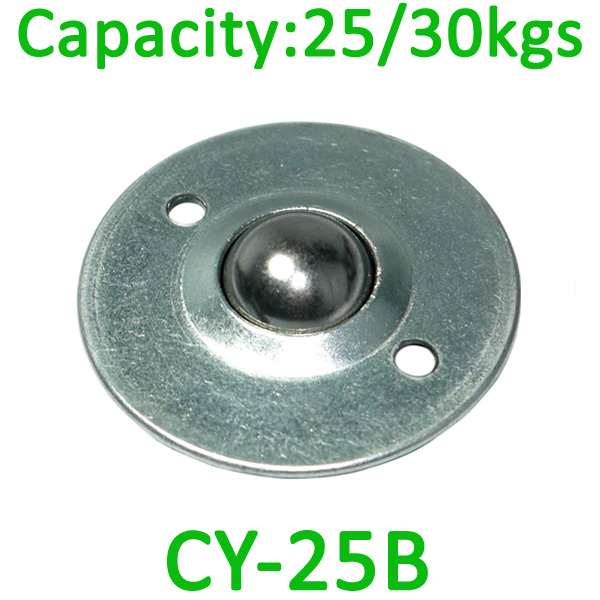
North America accounts for roughly 40% of global ball transfer unit revenue, driven by Industry 4.0 adoption and smart conveyor integration. The automotive sector held the highest revenue share in 2024, where light-duty units are specified for dashboard assembly stations, trim-line sorting tables, and compact turnkey conveyor modules. Meanwhile, the Asia-Pacific region is the fastest-growing market, with plastic BTU variants gaining popularity due to corrosion resistance and cost advantages in humid manufacturing environments.
A notable trend in 2026 is the integration of light load ball transfers into sensor-driven sorting systems. Warehouses are pairing compact stud-mount units with proximity sensors to create semi-automated redirect zones—no motors, no programming, just gravity and precision bearings. For operations handling flat-bottomed parcels under 50 kg, this approach can reduce per-station conveyor costs by an estimated 30% compared to powered roller sections.
As e-commerce fulfillment centers continue scaling upward while floor space stays fixed, the demand for compact, maintenance-free directional transfer points will only intensify. Light load ball transfer units—whether flange-mounted, stud-mounted, or drop-in—offer a straightforward answer: smooth multi-directional flow with zero power consumption and minimal upkeep.
- Pre:Ball Transfer Units in 2026 Material Handling Growth 2026/4/26
- Next:Assembly Line Automation Advances Drive Manufacturing Effici 2026/4/24