
Assembly Line Automation Advances Drive Manufacturing Efficiency in 2026
Manufacturing facilities are accelerating assembly line automation adoption as market demands intensify. According to IndustryARC, the Assembly Line Factory Automation Market is projected to reach $274.5 billion by 2030, growing at a CAGR of 3.3%. This growth reflects manufacturers' urgent need to address persistent labor shortages, cost pressures, and rising customer expectations for faster delivery and customization.
Hawk Ridge Systems reports that 2026 marks a pivotal shift toward connected automation ecosystems. Key trends include design automation going mainstream through tools like DriveWorks, digital twin implementation for virtual process validation, and AI-driven optimization across the production lifecycle. Doug Maatman, Enterprise Senior Services Specialist, notes that automation "ties disparate systems together and replaces the fragmented, error-prone world of manual data management." The material handling equipment market itself is expanding from USD 242.51 billion in 2025 to a projected USD 369.73 billion by 2032, according to market research.
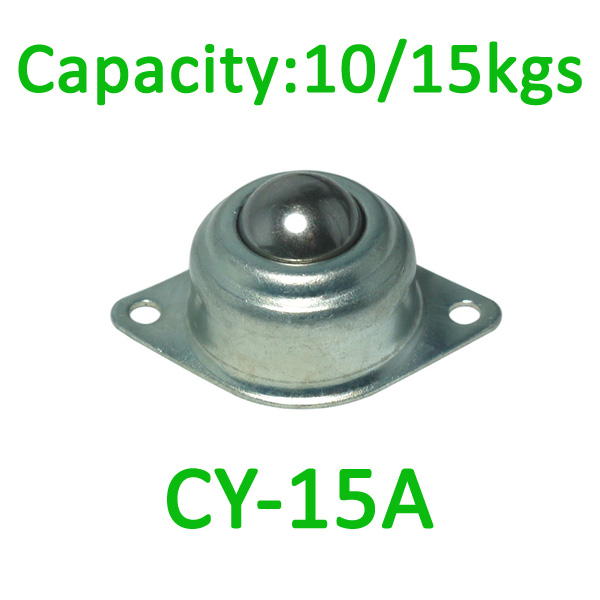
SKF's technical documentation highlights that ball transfer units serve as critical components in assembly line systems, enabling multi-directional movement for cargo handling, machine loading, and workpiece positioning. These units are engineered for harsh environments with heavy-duty load capacity, featuring dirt exit holes for extended operational life. Handling Specialty Manufacturing reports that ergonomics interventions incorporating such material handling solutions can reduce musculoskeletal disorder risk factors by up to 59% while boosting productivity by 25%.
Omtec Corp's spring-loaded ball transfer units demonstrate measurable impact in real-world applications. A major automotive manufacturer using these units in their assembly line reported a 15% efficiency increase through smoother transitions and reduced downtime. These systems facilitate the transfer of heavy components such as engines and transmissions across production stations. The automated material handling equipment market is expected to grow at 9.50% CAGR from 2025 to 2033, driven by AGVs and AMRs evolving beyond fixed paths to use sensors and AI for dynamic navigation.
With 56% of companies reporting supply chain disturbances in 2025, according to Handling Specialty analysis, agile automated assembly systems enable rapid adaptation to disruptions. Manufacturers implementing connected automation ecosystems achieve faster time-to-market, higher first-pass yield, and more scalable operations. As Doug Maatman observes, "The future of manufacturing is not just automated. It is connected."
- Pre:Light Load Ball Transfers Boost 2026 Warehouse Efficiency 2026/4/25
- Next:Warehouse Efficiency Improvements Driving 2026 Success 2026/4/23