
Conveyor Transfer Point Maintenance: Reducing Spillage
Conveyor transfer points, where material loads onto or unloads from a belt, are responsible for a disproportionate share of maintenance costs. According to the U.S. Mine Safety and Health Administration (MSHA), roughly 85% of all conveyor maintenance stems from fugitive material (spilled dust and debris that escapes at these junctions). The cost adds up fast. MSHA estimates that one worker spending a single hour per shift cleaning spillage at one transfer point racks up over $22,000 in annual labor. Over ten years, that figure tops $220,000, not counting equipment damage and unplanned downtime.
The root causes are well documented. Belt sag beneath the skirtboard creates gaps where dust and fines escape. Impact from falling cargo weakens the belt carcass and damages idlers. Martin Engineering field data from an iron pellet mill in Coahuila, Mexico, showed that abrasive dust infiltrated rollers and bearings until idlers seized monthly, requiring up to nine hours of downtime per incident. After replacing aging impact idlers with urethane-layered MD impact cradles and sealing the loading zone with external wearliners, operators reported spillage dropped significantly and belt damage from impact was fully eliminated.
Dust control at transfer points follows a clear hierarchy. Both Martin Engineering and Benetech recommend sealing the enclosure first: support the belt along the full skirtboard length, install dual skirting with external wearliners for safe access, and add three curtain zones to slow airflow below 200 ft/min. Only after the enclosure is sealed should operators add dust collection, such as mechanical air cleaners or chemical suppression systems. Benetech's MaxZone Plus system uses adjustable kicker plates and deflectors to center the load and reduce off-center spillage without replacing the entire chute. The Conveyor Equipment Manufacturers Association (CEMA) recommends that loading chute width not exceed two-thirds of the receiving belt width, and skirtboard length should follow the rule of 2 to 3 feet per 100 fpm of belt speed.
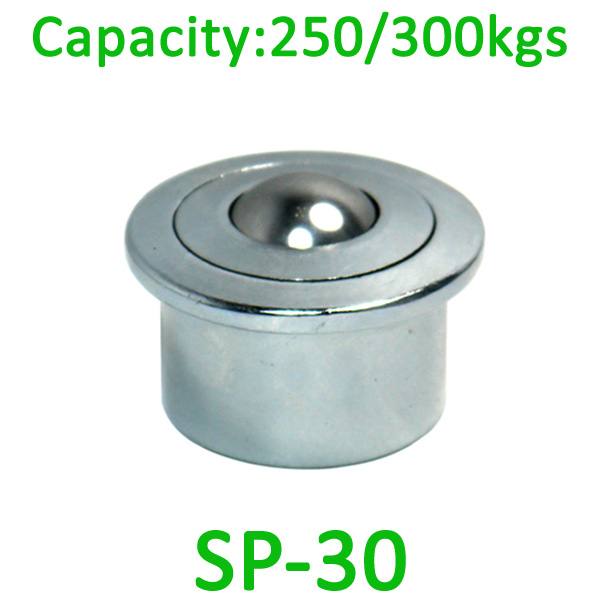
Where conveyor lines meet, merge, or change direction, ball transfer units provide an alternative transfer point design. Instead of dropping material from one belt to another, BTU arrays let operators rotate and redirect items across a flat surface with minimal force. Ahcell's SP series handles loads up to 4,000 kg per unit (ball diameters 8 to 90 mm), while the BTFM series supports up to 8,000 kg per unit, both meeting ISO 15299 dimensional standards. OMTEC's maintenance guide recommends lubricating BTUs every 1 to 3 months under heavy use with a quality bearing oil such as Mobil Vectra 1, and monthly spin-resistance checks. Compressed air cleaning before lubrication prevents debris from being pushed deeper into the housing. In humid or washdown environments, stainless steel units resist corrosion and extend service life.
A two-percent reduction in fugitive material translates to a 67% reduction in conveyor maintenance costs attributed to spillage, according to MSHA data. That makes transfer point maintenance one of the highest-ROI activities on any conveyor system.
- Pre:Ball Transfer Unit Load Rating: How to Calculate 2026/5/25
- Next:Conveyor Direction Change Systems: 4 Methods Compared 2026/5/19