
Stainless Steel Ball Transfers: 2026 Market Update
The global stainless steel ball transfer unit market reached USD 487.5 million in 2026, up from USD 462.8 million the previous year, according to 24 Market Reports. That 5.3% annual growth rate reflects two forces pushing demand: stricter hygiene regulations in food and pharmaceutical manufacturing, and the ongoing expansion of automated warehouse logistics.
Unlike carbon steel alternatives, stainless steel units resist corrosion in wet, acidic, and chemically aggressive environments. They cost 2 to 3 times more than carbon steel versions, but the tradeoff pays off in food processing plants and pharmaceutical cleanrooms where washdown procedures happen daily and component failure means contamination risk. SKF, Omnitrack, and Interroll all offer stainless steel lines rated for these conditions. Omnitrack's Heavy Duty 9000 series, in production since 1954, handles temperatures from minus 50 to 260 degrees Celsius with a friction ratio of just 1:0.005.
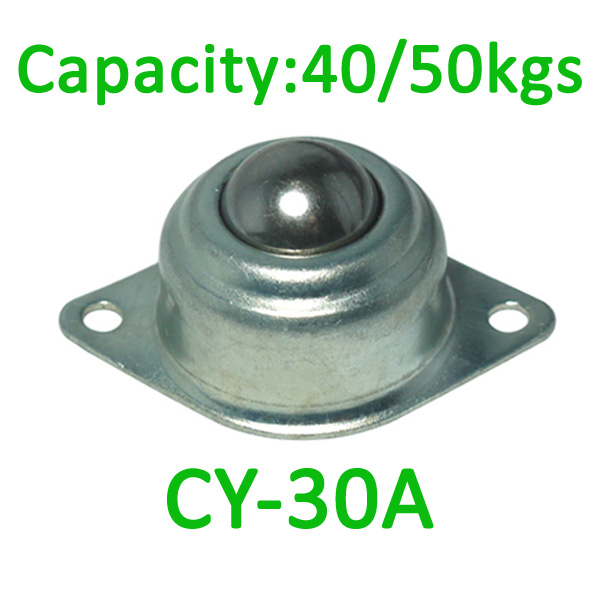
Asia-Pacific accounts for over 40% of global demand, driven by China's manufacturing upgrades and food safety modernization. North America and Europe follow, with FDA compliance and EU hygiene standards forcing equipment replacements in older facilities. Interroll's 5500 series, with load capacity up to 500N and polymer housing options, targets medium-load applications in packaging and assembly lines where stainless steel balls handle the contact while the housing keeps weight and cost down.
The food processing sector has become the single largest driver of stainless steel ball transfer adoption. Conveyor systems in meat, dairy, and ready-to-eat production require components that survive daily sanitization cycles without degrading. Solid stainless steel conveyor surfaces, as noted by Food Safety Magazine, reduce cross-contamination risk compared to painted or coated alternatives. Ball transfer units fit into these systems as rotation points at conveyor intersections, transfer tables, and sorting stations.
For facilities upgrading from carbon steel to stainless, the practical advice from Omnitrack's technical reference is straightforward: check your load orientation first. Heavy-duty stainless units maintain full rated capacity in any direction, ball up or ball down. Spring-loaded versions absorb shock on uneven tracks. And the friction advantage is real — stainless steel balls on precision-machined housings move loads with less effort than rollers on rails in many configurations.
- Pre:Packaging Machinery Market Reaches $71B in 2026 2026/5/3
- Next:Manufacturing 2026: $1T Digital Spend, Only 20% AI-Ready 2026/5/1